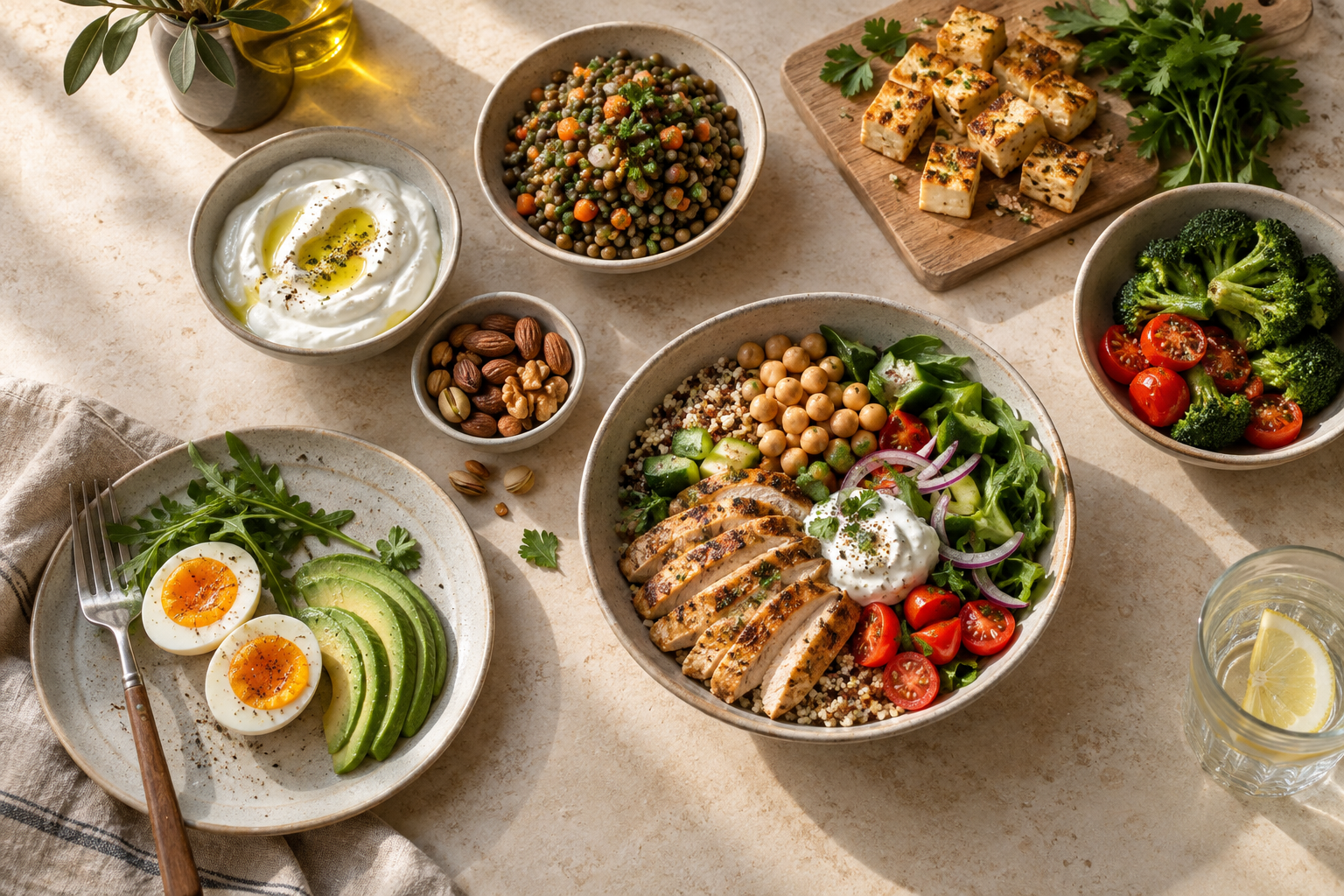
For healthy adults, about 0.83 g of protein per kilogram of body weight is a population reference point. Active people often need more, and the simplest approach is to include a quality protein source in three or four meals.
01
Why protein matters—even when you are not training
Protein provides amino acids the body uses to repair tissue and make enzymes, hormones and many other compounds. Muscle is only one part of the story.
Adequate intake matters when you want to preserve muscle, recover from training, lose weight without unnecessary muscle loss or simply build meals that keep you satisfied for longer.
The goal is not to eat as much protein as possible. It is to get enough, consistently, within a balanced diet.
02
How much protein do you need per day?
EFSA lists 0.83 g per kilogram of body weight per day as the population reference intake for healthy adults. For a 70 kg adult, that is about 58 g as a basic starting point.
With regular physical activity, needs are often higher. Sports-nutrition position statements commonly place most exercising adults around 1.4–2.0 g/kg/day, depending on training, total energy intake, goals and recovery demands.
These numbers are not universal prescriptions. Age, pregnancy, medical conditions, kidney health, the rest of your diet and professional advice may change what is appropriate.
70 kg × 0.83 g = about 58 g as a basic reference
70 kg × 1.4 g = about 98 g for a more active person
70 kg × 2.0 g = about 140 g at the upper end of the sports range
03
Distribution matters more than perfect timing
If almost all your protein arrives at dinner, breakfast and lunch miss the chance to be more nourishing and satisfying. A practical approach is to include a clear protein anchor in every main meal.
For many active adults, roughly 20–40 g of quality protein in a meal is a useful working range. Body size, age and training demands can shift it.
You do not need to eat every two hours or panic about a tiny anabolic window. Total daily intake, consistency and food quality matter more than the exact minute you drink a shake.
04
How to get enough without overcomplicating it
Start with one question: can you see a protein source in each main meal? It may be eggs, skyr or Greek yogurt, cottage cheese, fish, chicken, lean meat, tofu, tempeh, legumes or a thoughtful mix of plant proteins.
Supplements can be convenient on a busy day, but they are optional. Food is the foundation; a protein shake is a tool, not a rule.
Breakfast: eggs, skyr or a protein smoothie
Lunch: fish, chicken, tofu or legumes
Snack: yogurt, cottage cheese or a convenient shake
Dinner: protein + vegetables + carbohydrate according to your needs
05
The best plan is the one you can repeat
You do not have to weigh every bite forever. Track portions briefly, choose three to five meals that suit your life, then repeat them.
Results come from connecting protein with total energy, vegetables, fibre, useful carbohydrates, training, sleep and a realistic schedule. That is where personal guidance becomes valuable.
Explore related guides
Want a clear plan?
Turn the numbers into meals that fit your life.
Our Personalized Nutrition program helps you build simple meals, a repeatable routine and support without extreme rules.
Not sure where to start? Send us PROTEIN and we will reply personally.
Matea & Vanja